
Should You Buy the Bungalow?
The Surprising Downside of Making Life Too Easy
A few weeks ago I was visiting a client who had moved into a lovely bungalow. As we chatted over a cup of tea, she smiled and said, "Do you remember what you said about the stairs?"
I did. A couple of years earlier, when she'd told me she was thinking of moving, I'd asked a question she'd never really considered: "What will you lose by removing the stairs?" She admitted she'd thought I was overthinking it at the time, but now she wasn't so sure.
She explained that although life at home had become easier, she found stairs much harder everywhere else—Sunday lunches, hotels, holidays and visiting friends. She felt she'd gradually lost some of the strength and confidence that years of climbing stairs every day had quietly helped her maintain.
That conversation has stayed with me, because one of the most common conversations I have with clients in their seventies and eighties begins with exactly the same sentence: "We're thinking of moving to a bungalow."
On the face of it, the decision seems obvious. The stairs are becoming a bit of a nuisance, one of you might have a bad knee or a stiff hip, and the garden feels like a little too much work. Surely a bungalow is the sensible choice?
Sometimes it is—but not always.
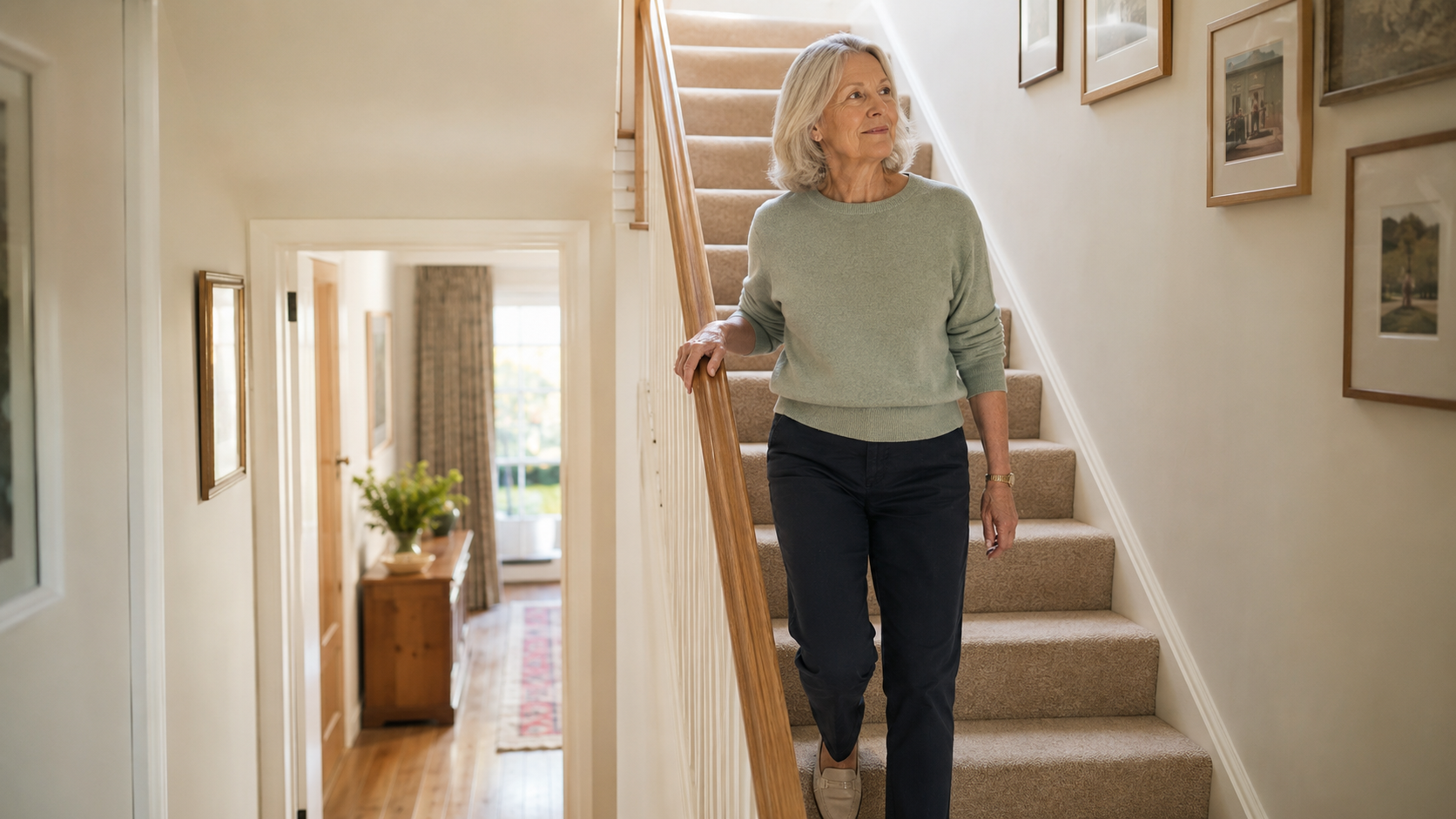
An active older woman using the stairs in her home
The Hidden Value of Stairs
One of the greatest assets we have as we grow older isn't our pension or our investments; it's our mobility. The ability to walk comfortably, climb stairs, carry shopping, visit friends, travel and remain independent often determines whether later life is enjoyable or frustrating.
After nearly thirty years as a financial planner, one of the things I've observed is that clients who keep moving tend to stay independent for longer. Whether that's walking the dog, gardening or simply going up and down the stairs, our bodies seem to like being used.
The beauty of stairs is that they provide that movement almost without us noticing. We don't think of walking upstairs as exercise—but our bodies certainly do. Remove the stairs, and you also remove dozens of small moments of physical movement every day. It may not seem significant today, but over the course of ten or twenty years, those missing steps can add up.
The Couples Dilemma
For couples, the decision can be even more complicated. Frequently, one partner genuinely struggles with the stairs while the other is still completely comfortable climbing them every day. Moving to a bungalow solves one person's physical challenge—but it can unintentionally remove a healthy daily activity from the other.
Before uprooting your lives, it's worth asking whether there is another option:
Stairlifts: A stairlift may allow the partner who is struggling to move safely between floors while the other continues using the stairs as normal.
Through-floor lifts: In some homes, a through-floor lift can provide an excellent long-term solution if mobility is likely to deteriorate further over time.
Neither option is perfect, and both involve installation, compromise and expense—but so does moving house.
Looking Beyond the Price Tag
From a financial perspective, adapting your existing home can often make far more sense than relocating. Moving doesn't just involve estate agent fees, solicitor costs and removals; in many cases you'll also pay Stamp Duty—one of the largest transaction costs many people will ever incur.
Then there's the property itself. Bungalows are relatively scarce, often sit on larger plots, and are highly sought after by older buyers looking to avoid stairs. Unsurprisingly, they frequently command a premium. In other words, you may be paying a significant amount simply to remove a staircase.
For some people, that premium is entirely justified. If stairs have become unsafe or painful, a bungalow may dramatically improve day-to-day life. However, if you're still reasonably mobile, it's worth asking whether spending a fraction of those moving costs adapting your existing home could leave you financially stronger and physically healthier. It may even leave money available for improvements that make later life even more enjoyable—a new kitchen, a more accessible bathroom or a garden redesigned to be easier to maintain.
Rather than spending hundreds of thousands of pounds changing your address, you may be able to spend a fraction of that amount improving the home you already love.
Making Life Easier... or Better?
This isn't an argument against bungalows. For many people they are precisely the right solution at the right time. But if convenience is the primary motivation, it is worth pausing before removing one of the few forms of exercise that naturally occurs every day.
Financial planning isn't about buying the right house; it's about helping you live the right life in that house for as long as possible. Instead of asking: "Should we buy a bungalow?", try asking: "How will we replace the daily movement we're about to lose?"
And perhaps an even better question: "Can we adapt the home we already love, rather than moving both of us into a home designed around the needs of only one of us?"
This is why financial planning is rarely just about money, rates of return or tax efficiency—it's about understanding how today's decisions shape tomorrow's living experience. Sometimes that will mean buying the bungalow, and sometimes it will mean adapting the home you already love. Neither choice is inherently right or wrong.
The best decision isn't the one that removes today's inconvenience; it's the one that gives you the best chance of living well tomorrow. And sometimes, the best investment you'll ever make isn't in a different house—it's in making your current one work for the life you still want to live.
Enjoyed this article?
Join Tomorrow's Notes for one thoughtful email every Friday with ideas about money, time and living well.